How to Select the Perfect Canvas Size for Your Wall Art Project
Choosing the right canvas size is one of the most important steps in creating a visually balanced and professional-looking interior space. Whether you're decorating a living room, bedroom, hallway, or office, the size of your artwork directly impacts how the space feels. Too small, and the wall looks empty and incomplete. Too large, and the room can feel crowded or overwhelming.
If you're exploring high-quality wall décor options, you can start with premium canvas prints, which allow you to turn personal photos or artwork into beautifully printed wall features tailored to your space.
In this guide, we’ll break down everything you need to know about selecting the perfect canvas size, including wall measurements, furniture alignment, design principles, and common mistakes to avoid.
Why Canvas Size Matters More Than You Think
Many homeowners focus on image selection but overlook size. However, in interior design, scale is just as important as style. The right canvas size helps create balance, harmony, and visual flow within a room.
A well-sized canvas print can:
- Anchor a room’s focal point
- Improve visual proportion
- Enhance furniture alignment
- Add depth and personality to a space
On the other hand, the wrong size can make even the most beautiful image feel out of place.
Step 1: Measure Your Wall Space Properly
Before choosing any canvas print, you must understand your available wall space. A common mistake is guessing size visually without actual measurement.
Here’s a simple method:
- Measure the width and height of your wall
- Identify the central focal area (usually above furniture)
- Leave at least 15–25% negative space around the artwork
This ensures your canvas does not feel cramped or oversized.
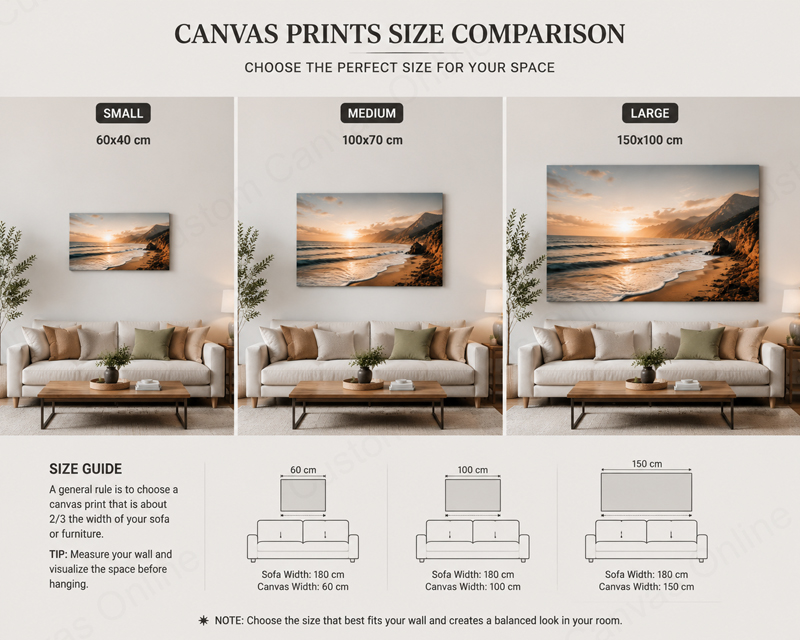
Step 2: Consider Furniture Proportion (The 2/3 Rule)
One of the most reliable interior design principles is the “two-thirds rule.”
For wall art above furniture (such as a sofa or bed), your canvas should be approximately:
- 60% to 75% of the furniture width
Example:
- Sofa width: 200 cm
- Ideal canvas width: 120–150 cm
This creates a visually balanced relationship between furniture and artwork.
Ignoring this rule often results in either floating artwork (too small) or overpowering visuals (too large).
Step 3: Choose the Right Orientation
Canvas orientation plays a big role in how the wall feels:
Horizontal (Landscape)
Best for:
- Above sofas
- Dining tables
- Wide walls
- Living rooms
Creates a sense of stability and calm.
Vertical (Portrait)
Best for:
- Narrow walls
- Hallways
- Entryways
- Beside furniture
Creates height and elegance.
Square Format
Best for:
- Modern minimalist interiors
- Grid-style arrangements
- Balanced compositions
Step 4: Understand Visual Weight
Visual weight refers to how “heavy” or “light” an artwork feels in a space. This depends on:
- Color contrast
- Image complexity
- Frame thickness
- Canvas size
Dark or detailed images appear heavier and may require a slightly smaller size. Light, minimal designs can often be printed larger without overwhelming the space.
Step 5: Popular Canvas Print Sizes and When to Use Them
Here are commonly used canvas print sizes and their ideal applications:
Small (30x40 cm – 40x60 cm)
- Ideal for small rooms
- Desk areas
- Gallery wall additions
Medium (60x80 cm – 80x120 cm)
- Standard living rooms
- Bedrooms
- Above small furniture
Large (100x150 cm and above)
- Feature walls
- Large living rooms
- Statement artwork pieces
Large canvas prints are increasingly popular because they create a bold focal point without needing multiple frames.
Step 6: Single Canvas vs Multi-Panel Canvas
Another important decision is whether to use a single print or a split-panel design.
Single Canvas Print
- Clean and simple
- Best for minimal interiors
- Easier to align
Multi-Panel Canvas (Triptych or Split)
- More dynamic and modern
- Adds movement and depth
- Works well for landscapes and abstract art
Multi-panel designs require more planning but often create a more artistic feel.
Step 7: Wall Type and Room Function
Different rooms require different canvas strategies:
Living Room
- Large or medium-large sizes
- Strong focal point above sofa
- Warm and inviting imagery
Bedroom
- Softer tones
- Medium sizes above bed
- Calm and relaxing compositions
Office
- Motivational or abstract art
- Medium sizes
- Clean and minimal layout
Hallway
- Vertical or narrow prints
- Series or sequential images
Step 8: Common Mistakes to Avoid
Even a great canvas print can look wrong if placed incorrectly. Avoid these common mistakes:
- Choosing a canvas that is too small for the wall
- Hanging artwork too high above furniture
- Ignoring room lighting
- Mixing too many styles in one space
- Not considering viewing distance
A good rule: the center of your canvas should be at eye level (around 145–155 cm from the floor).
Step 9: Planning Before You Buy
Before ordering canvas prints, take time to visualize:
- Tape the size on your wall using masking tape
- Use digital mockups if available
- Compare different sizes in real space
- Consider future furniture changes
This helps prevent costly mistakes and ensures long-term satisfaction.
Choosing the perfect canvas size is not just about decoration—it’s about creating balance, emotion, and harmony in your space. By understanding proportions, furniture relationships, and room function, you can confidently select canvas prints that elevate your home interior.
A well-sized canvas transforms a blank wall into a meaningful visual experience, turning your house into a more personal and thoughtfully designed space.
Recent Posts
-
Print Photos onto Canvas for Living Room Wall Art Ideas
Your living room is one of the most important spaces in your home. It is where family gathers, guest …16th Sep 2026 -
How to Create a Custom Canvas Photo Print That Looks Professional
A custom canvas photo print is more than just putting an image onto a piece of fabric. When desi …28th Aug 2026 -
Affordable Custom Canvas Prints: The Perfect Decor Solution for Renters
Decorating a rental home can be challenging. Many renters want their space to feel personal, stylish …25th Aug 2026